| Buy this book |
| Amazon.com |
| Barnes&Noble.com – $23.00 |
| Books-A-Million |
| Borders – $23.00 |
| IndieBound |
| Google Product Search |
| Borrow this book |
| Find this book in a library |
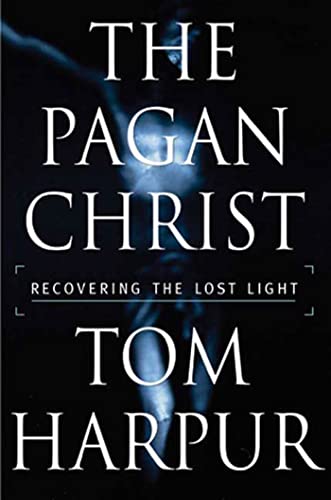
A provocative argument for a mystical, rather than historical, understanding of Jesus, leading to a radical rebirth of Christianity in our time.
For forty years, scholar and religious commentator Tom Harpur has challenged church orthodoxy and guided thousands of readers on subjects as controversial as the true nature of Christ and life after death. Now, in his most radical and groundbreaking work, Harpur digs deep into the origins of Christianity.
Long before the advent of Jesus Christ, the Egyptians and other peoples believed in the coming of a messiah, a virgin birth, a madonna and her child, and the incarnation of the spirit in flesh. While the early Christian church accepted these ancient truths as the very basis of Christianity, it disavowed their origins. What had begun as a universal belief system built on myth and allegory was transformed, by the third and fourth centuries A.D., into a ritualistic institution based on a literal interpretation of myths and symbols. But, as Tom Harpur argues in The Pagan Christ, "to take the Gospels literally as history or biography is to utterly miss their inner spiritual meaning."
At a time of religious extremism, Tom Harpur reveals the virtue of a cosmic faith based on ancient truths that the modern church has renounced. His message is clear: Our blind faith in literalism is killing Christianity. Only with a return to an inclusive religion where Christ lives within each of us will we gain a true understanding of who we are and who we are intended to become. The Pagan Christ is a book of rare insight and power that will reilluminate the Bible and change the way we think about religion.
It is not often that one who has lived within the Christian Faith all his/her life and has for many years been a student of the many writings about elements of that faith comes to a point where he/she says, "Can any of this be true?" about some newly discovered writings that present one's faith in a radically altered manner. That was my reaction upon reading Tom Harpur's recent book, The Pagan Christ.Harpur has solid credentials as a Christian scholar. He is a Rhodes scholar and former Anglican priest and professor of Greek and New Testament at the University of Toronto, columnist for the Toronto Star, renowned writer on religious and ethical issue, author of nine best selling books including for Christ Sake and Would You Believe? He has hosted radio and television programs, including series' on his own best selling books.What brought Harpur to this fresh new perception about the origins of his faith and particularly about the faith's central character, Jesus Christ, was in fact, not newly minted discoveries from some recently discovered documents found in recently uncovered caves or ancient monastery libraries. It was instead his "discovery" of the writings of three men born from 1771 to 1880, the last dying in 1963. They are Godfrey Higgins, Gerald Massey, and Alvin Boyd Kuhn. What these three men shared was their interest in and pursuit of knowledge of the pre-Christian faiths, most especially, but not limited to the religions of the Near East.As he probed the writings of these and other scholars of ancient religions he found himself saying; "What if it is true? The implications were enormous. It meant, you see, that much of the thinking of the civilized West has been based upon a ‘history' that never occurred, and that the Christian Church has been founded on a set of miracles that were never performed literally. Finally, though, I said to myself, because of the sheer weight of the evidence before me, Yes, I believe it is true. And that has made all the difference, a huge and immensely positive difference for my understanding of my faith and my own spiritual life… Simultaneously, it has transformed my view of the future of Christianity into one of hope." (3)I found it both interesting and hopeful that, rather than an experience of the loss of something very important to him, Harpur instead experienced the receiving of a valuable gift of an enriched and vitalized spiritual faith. And I found that the reading of his book, along with my recent reading of Doherty's book The Jesus Puzzle produced this same uplifting response within me. And it is, again, interesting and hopeful that Harpur has gotten responses from many who have read his book that they, too, have felt blessed by the discovery of something new and valuable, rather than the loss of something precious. Why is this so?Harpur makes it very clear in his book that the stories of Jesus' life and teachings, while attributed to "history" are instead the recounting of universal and timeless truths, formerly understood as myths and allegories, and that in this non-historical form they are found in religions world-wide. The great tragedy is that in the 3rd and 4th centuries of our Christian era, the understanding of eternal truths told in story form, without concern for "historical accuracy" and "orthodoxy", lost out to the need for uniformity and control, turning "religion " into another form of power used by one group over others.When this occurred, as expressed in the "Nicene Creed," banishment, brutal murders, and the suppression of writings began to occur, in the name of the "Prince of Peace".Like Harpur, I was astounded to realize that nowhere in my seminary training had I been exposed to the numerous preexisting writings that had made it plain that the total story of Jesus' life, ministry, death and resurrection had been told previously (sometimes as early as 3000 BCE) in Egyptian and pagan religions. One of the most positive messages I found in Harpur's book is that in almost all religions, throughout history, the central truth being told over and over again in many varied ways is that the divine, perpetually and universally, enters into the material world, and that the two are, in fact, inseparable. Every religion attempts to offer us tools to help us both understand, but more importantly, truly experience this reality. In earlier times, these religions, by and large spelled out a closer bond between the spiritual world and the natural world of planet earth. I see hopeful signs that we are again moving toward that "marriage". So, what now? Do we just put on a massive effort to promote books such as those like Harpur's, in the hope and assumption that as they are more widely read others will experience of a new "Cosmic Christianity"?(177) Harpur quotes Alvin Boyd Kuhn from his book The Root of All Religion: The historical Jesus as a civilizing influence has now been tried for nearly twenty centuries. With a weird irony, not only has it not in large measure elevated humanity in the West above an earlier barbarism, but it has in fact been used as a cloak for the worst atrocities and inhumanities that history records. The foulest cruelties were perpetuated in the very name of the gentle Nazarene! It well behooves humanity in the West now to try the concept of the indwelling Christ, the hope of our glory.I am predicting the following: As the works of those like Earl Doherty and Tom Harpur, produce the growing evidence of the non-historical origin of the Jesus story, it will be seen by fundamentalists as a further slide of Christian liberals toward the "Heretic's Hell". On the other hand, I believe there will be a growing group of Christians for whom this perspective will be a welcome and positive gift of a more deeply held and profound Christian faith. As both Tom and I are past 80, I doubt if either of us will live long enough to see how he and others like him do in fact affect our understanding of the Christian Faith and Western culture. Oh well. . .Dean G. Watt